Find your hook
Step 1 — how does it connect?
Rigging & lifting hooks
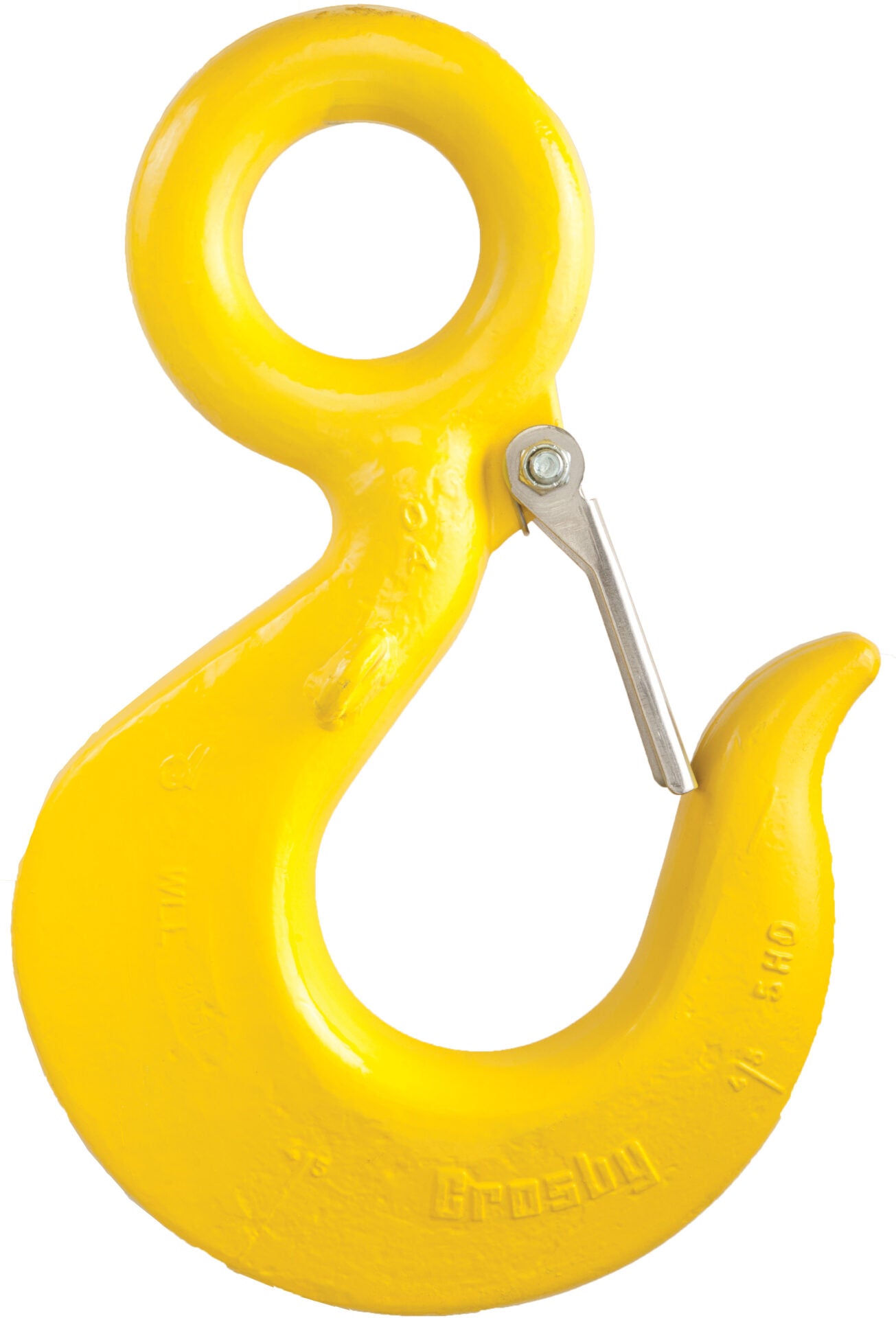
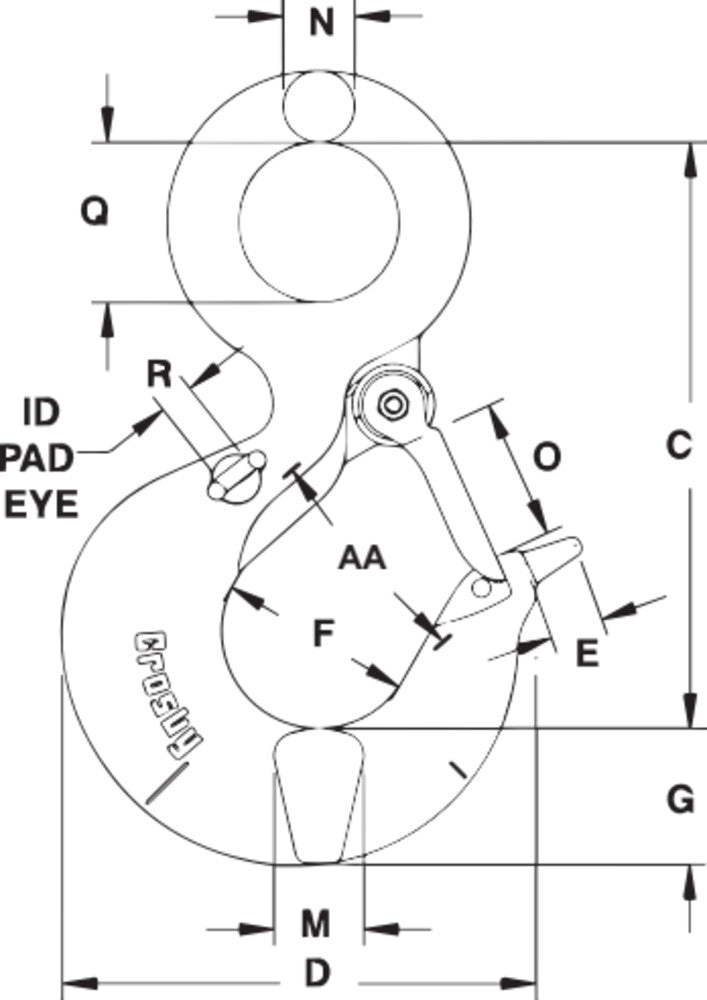
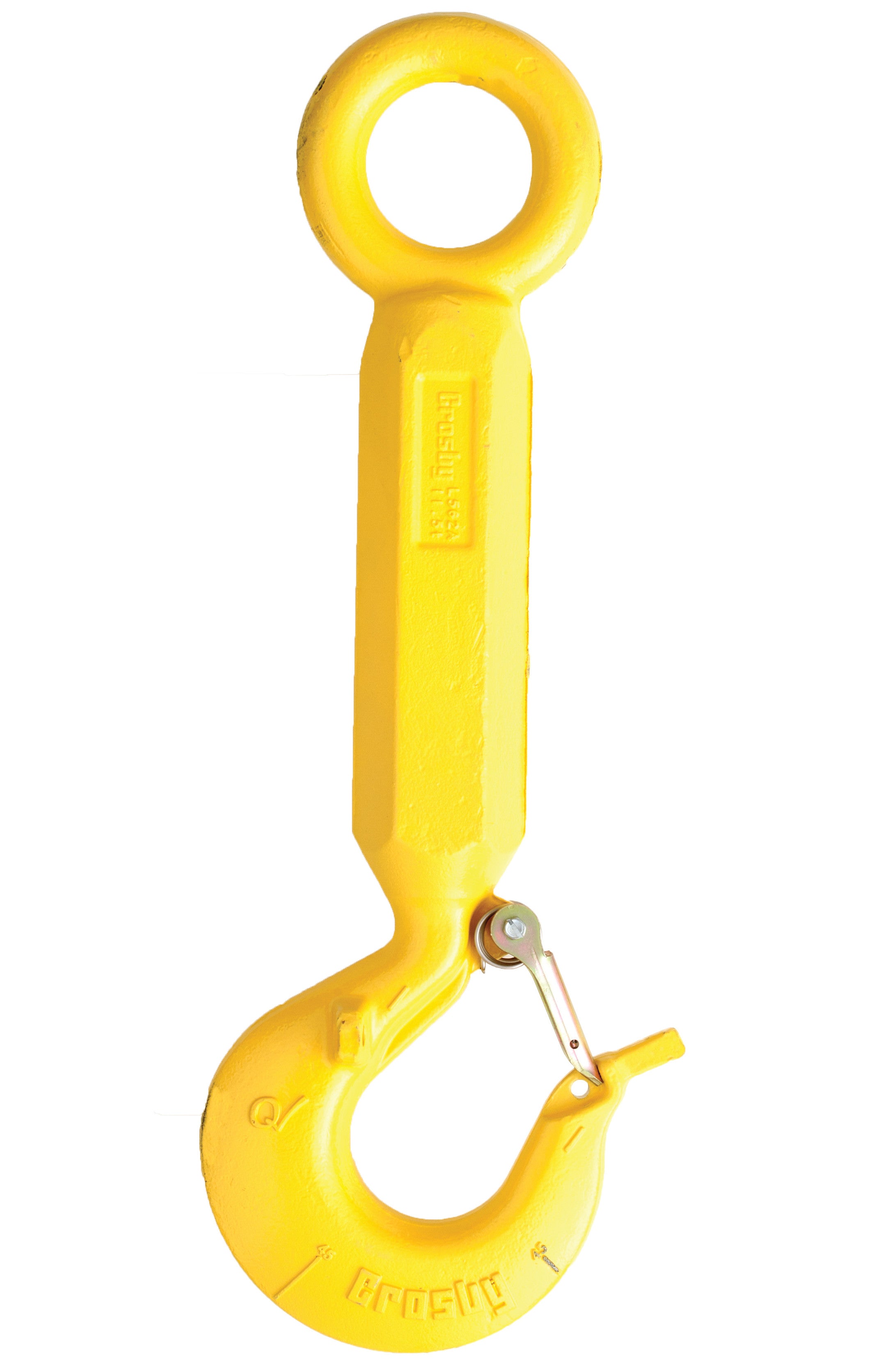
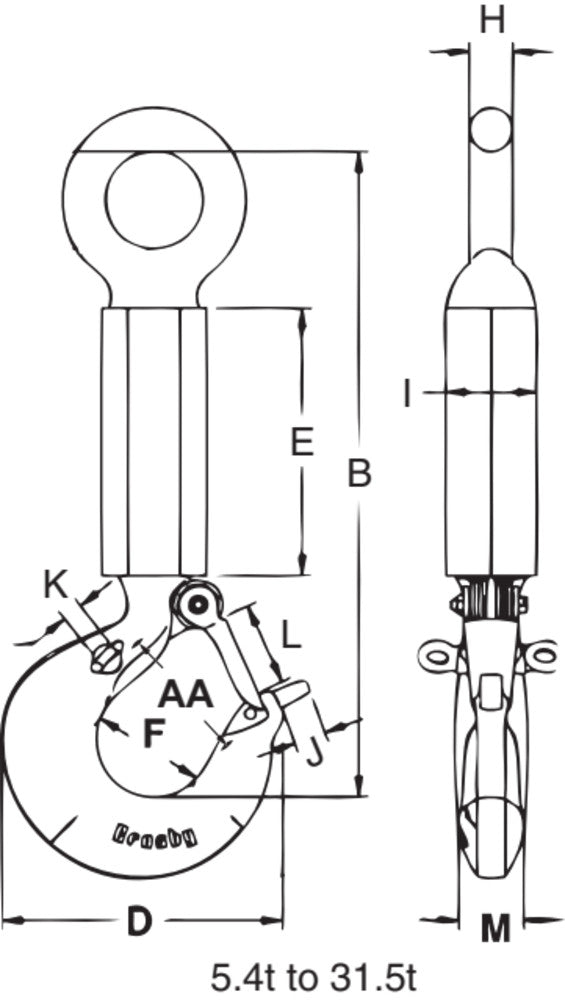
A hook is the connection point at the working end of a sling, chain, or wire rope assembly. Choosing the right one comes down to two things: how it attaches to your assembly (the connection point) and how it is designed to be used (the hook type). Sling Center stocks Crosby, Green Pin (Van Beest), and Gunnebo hooks in alloy Grade 80, Grade 100, and stainless.
Hook connection points
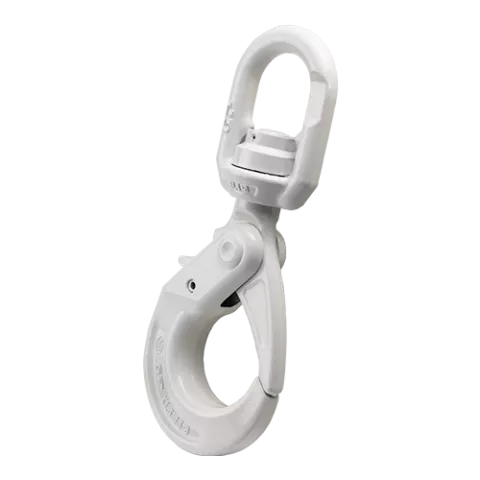
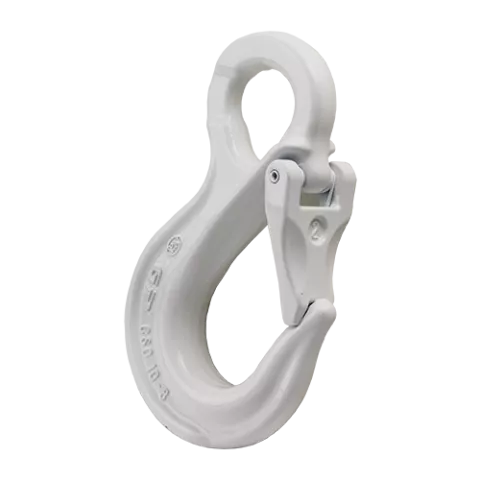
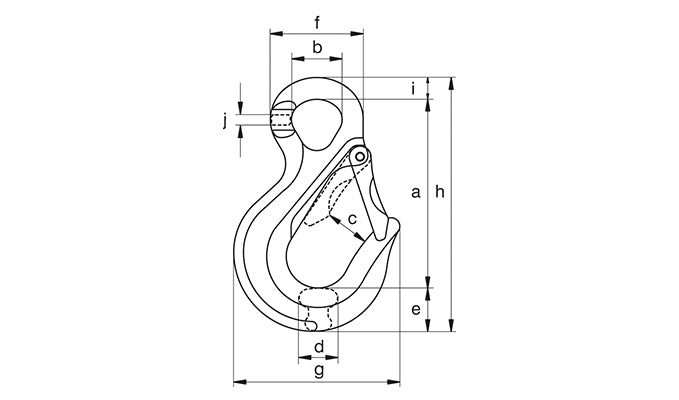
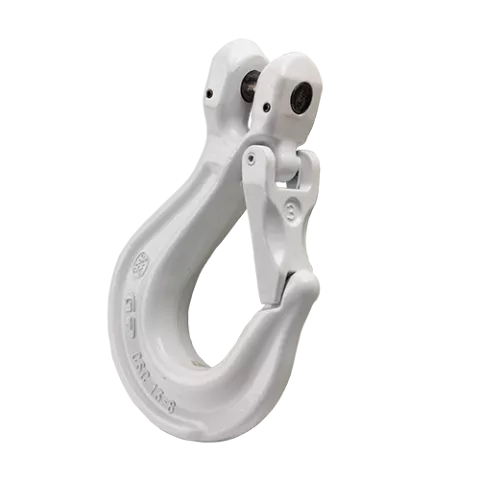
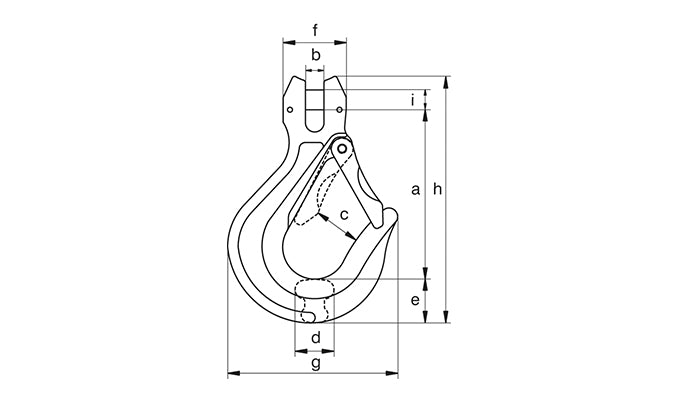
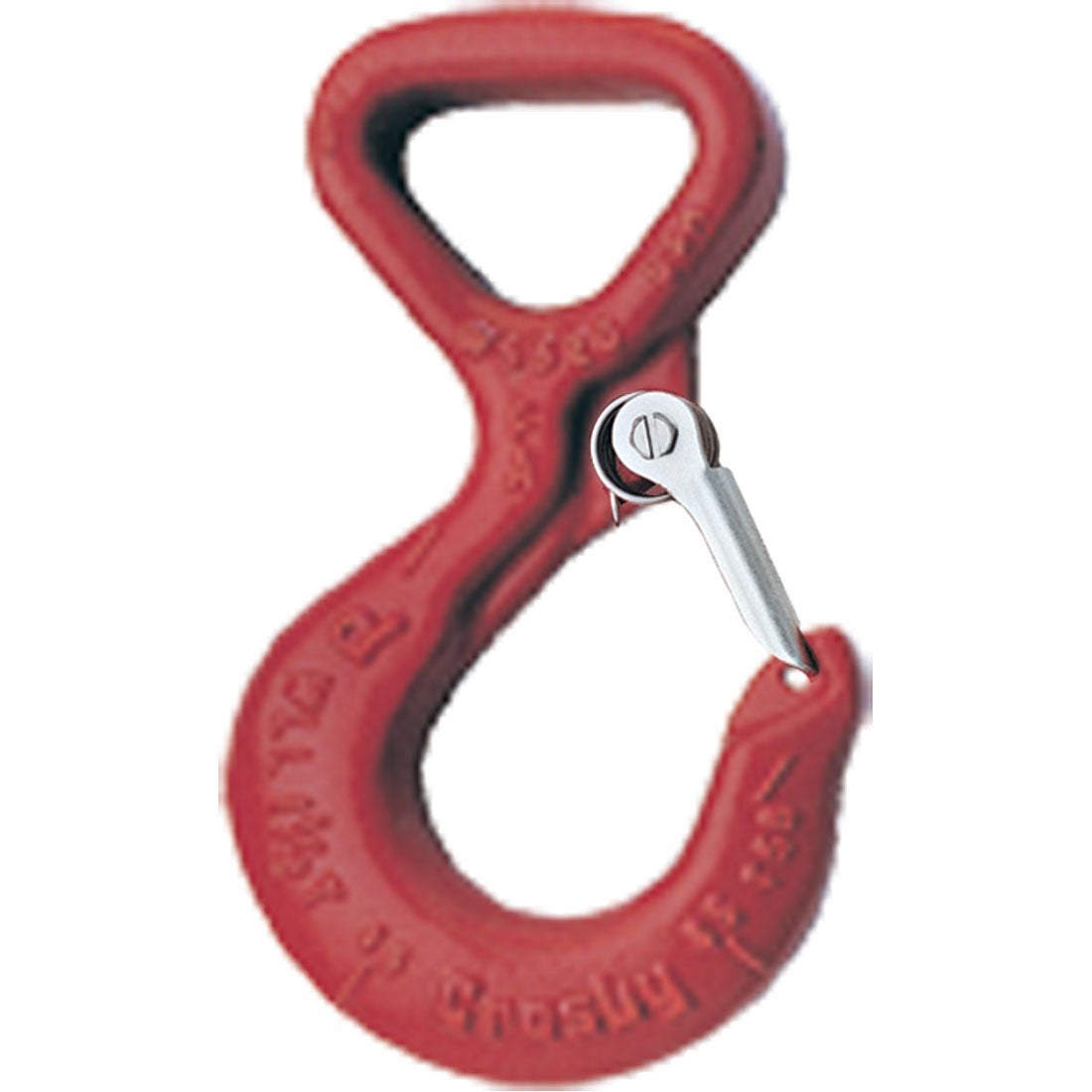
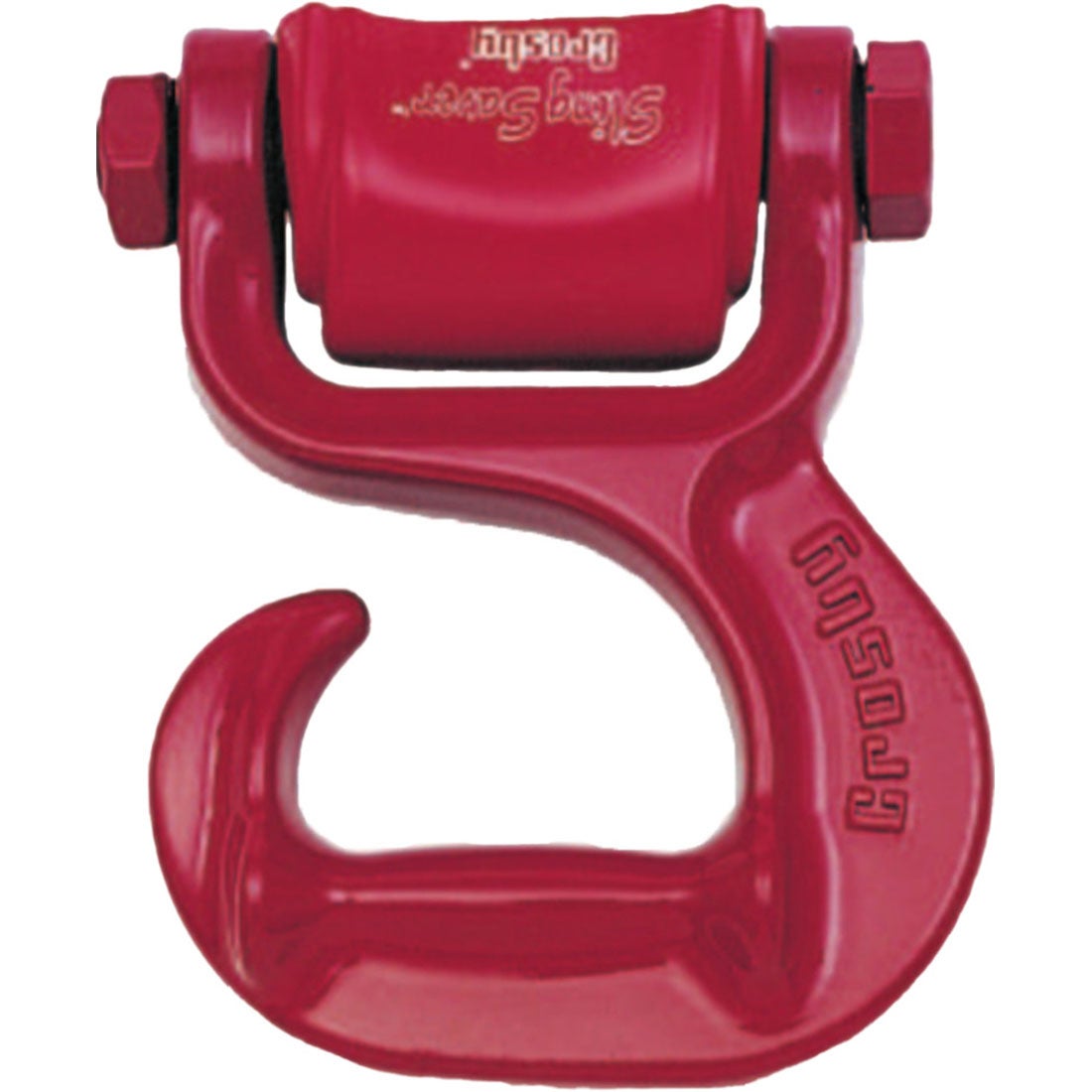
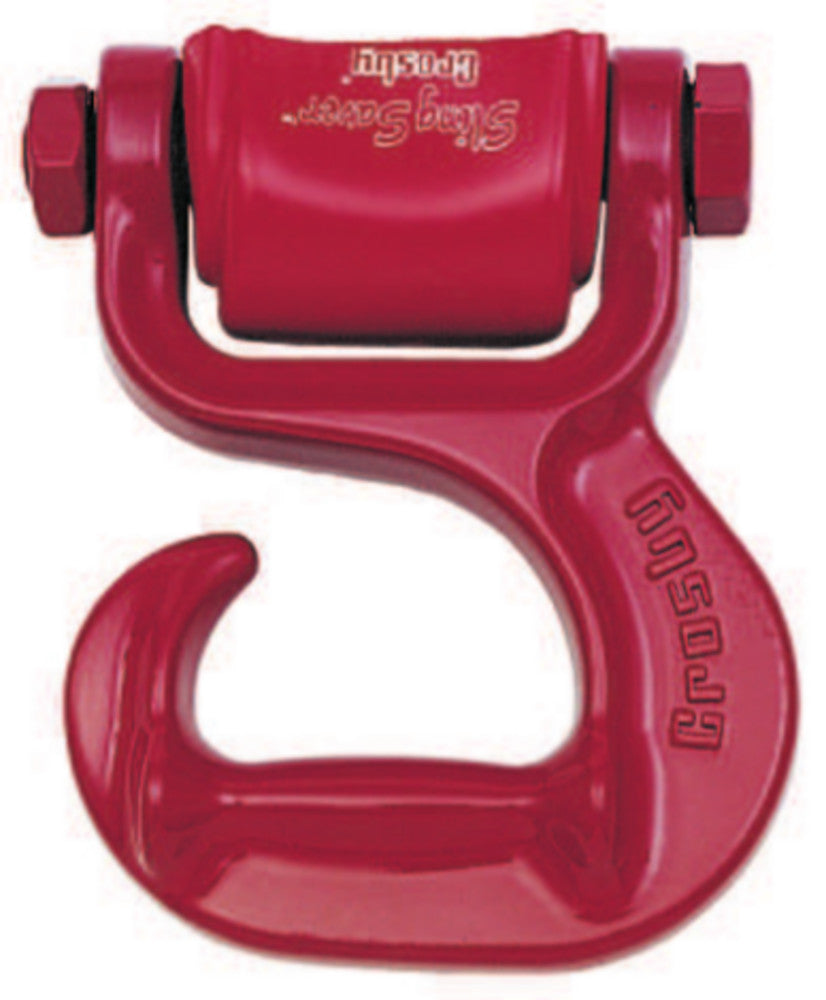
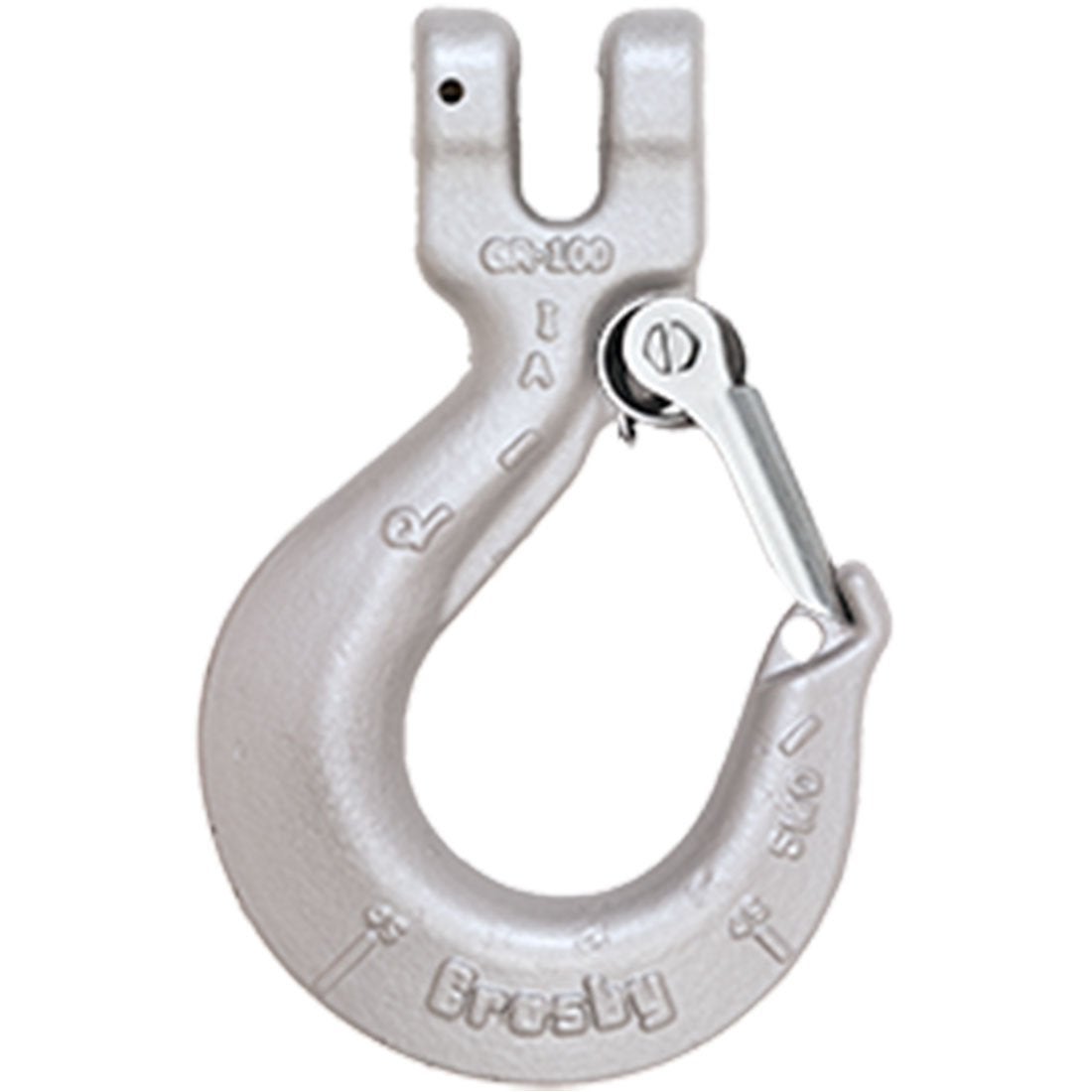
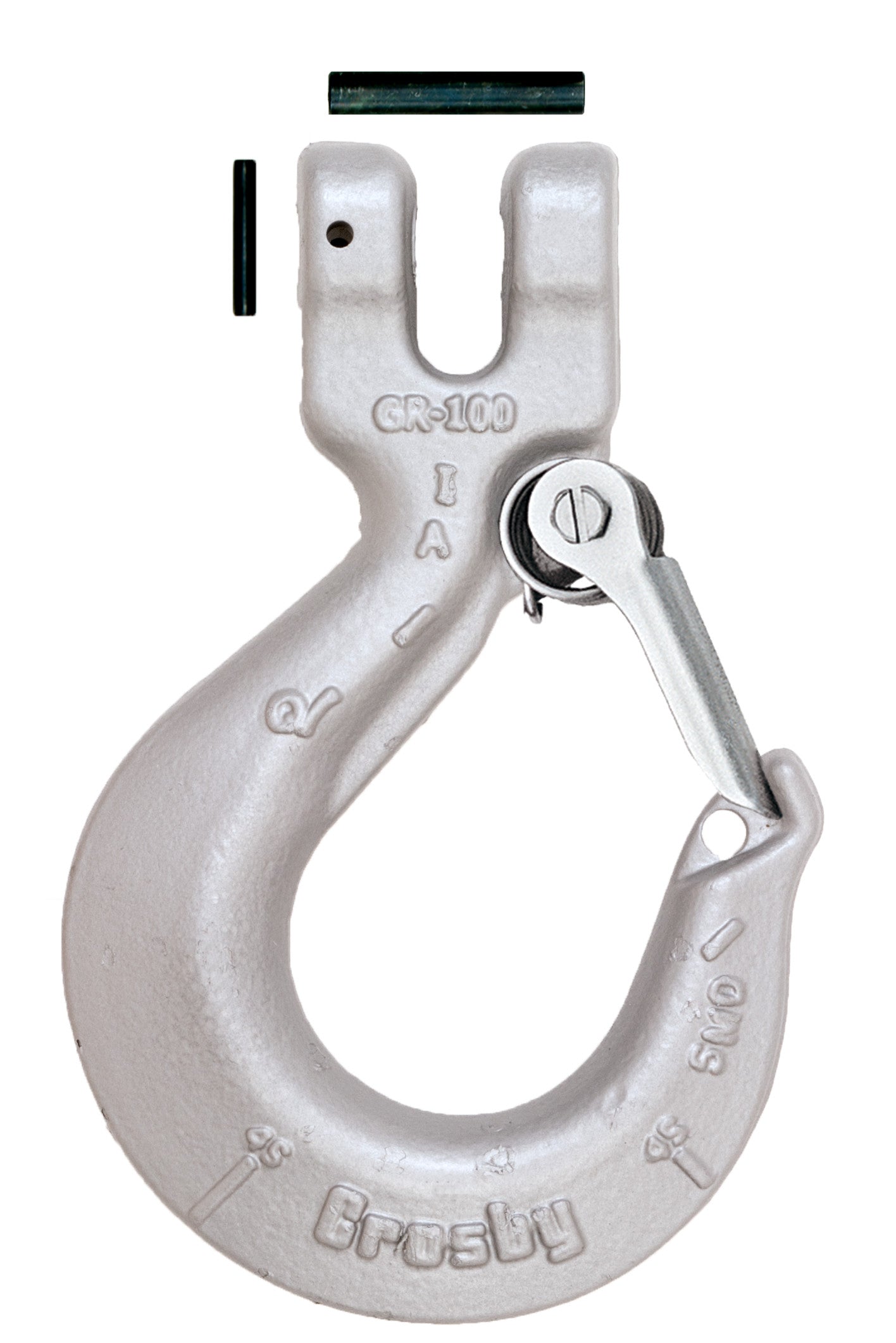
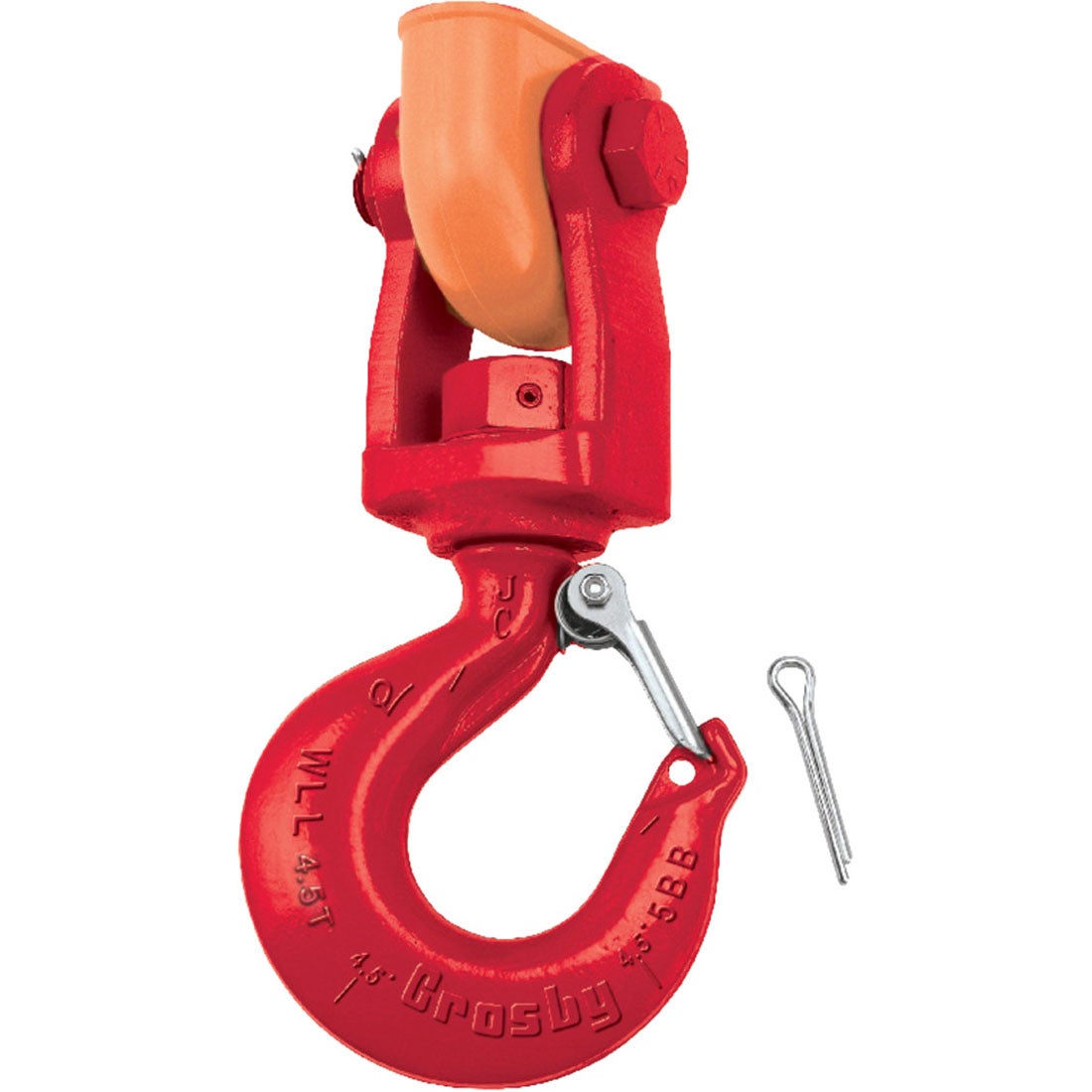
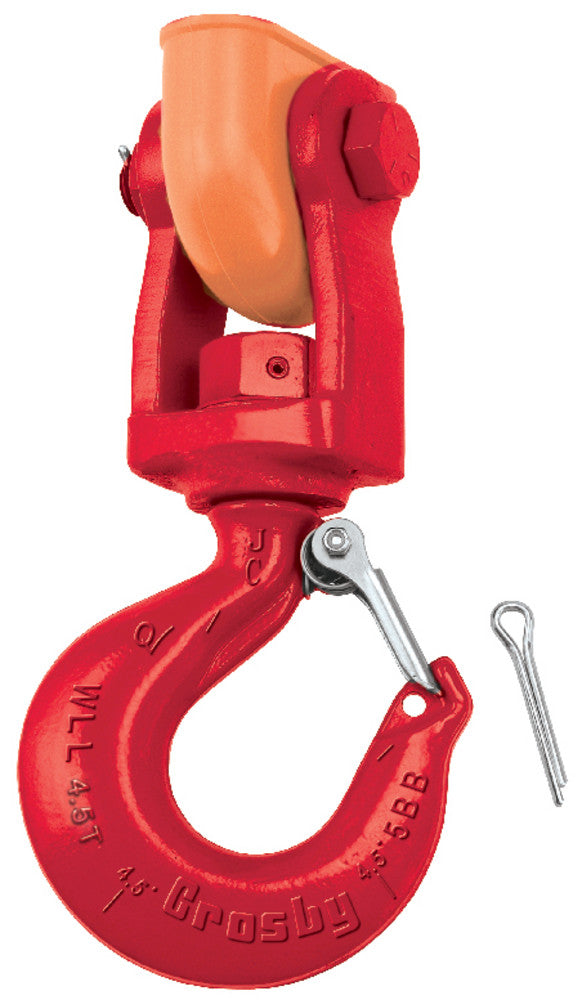
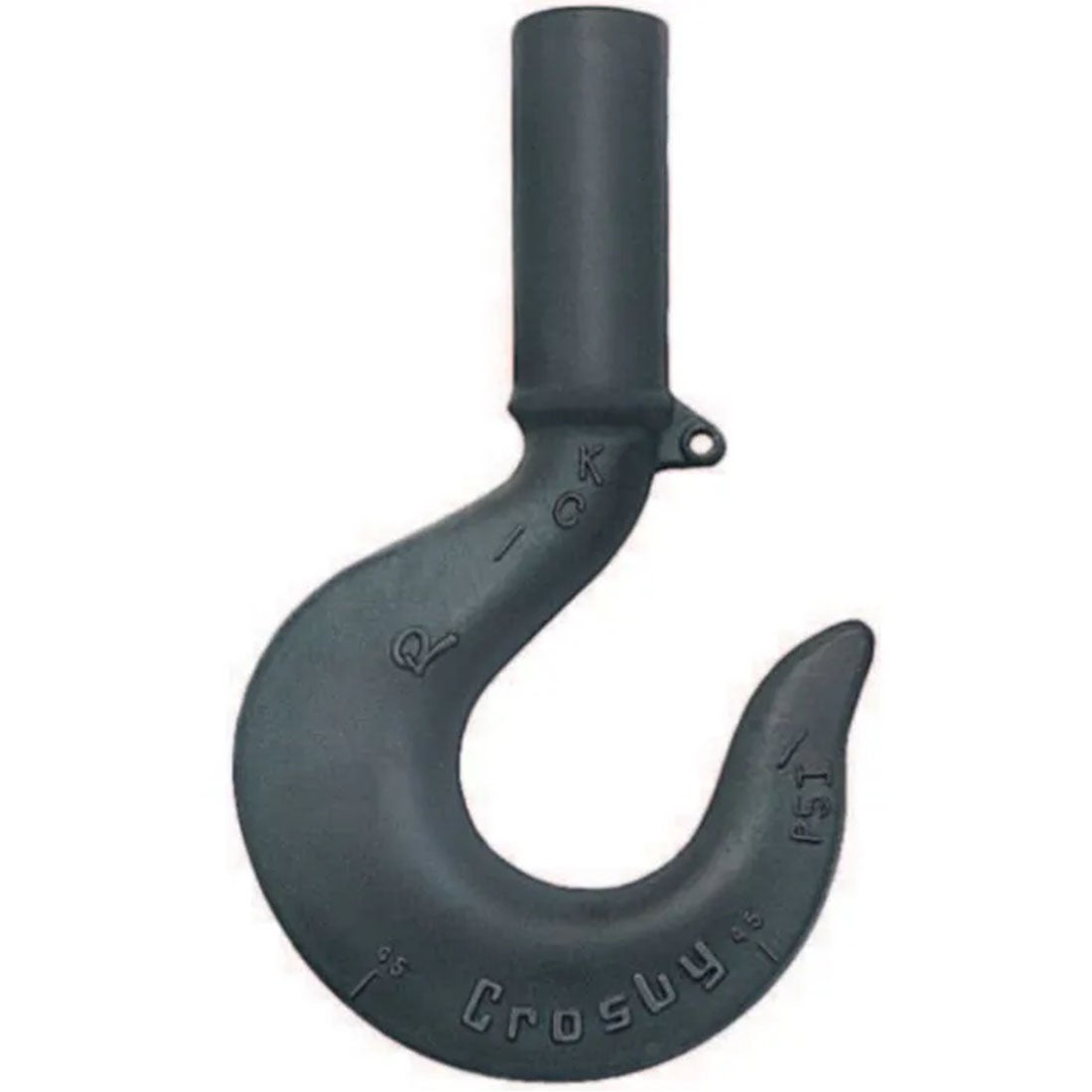
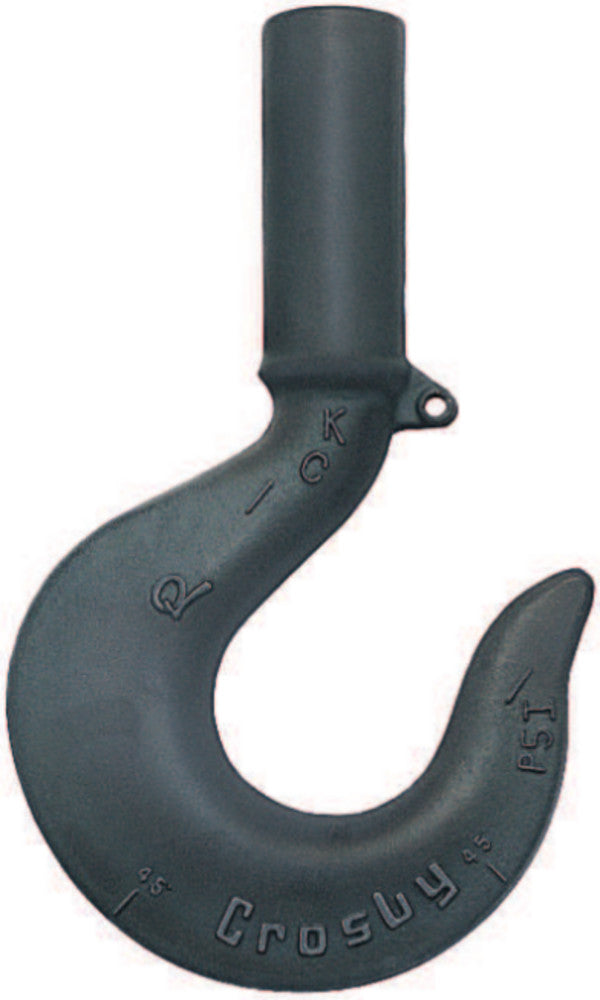
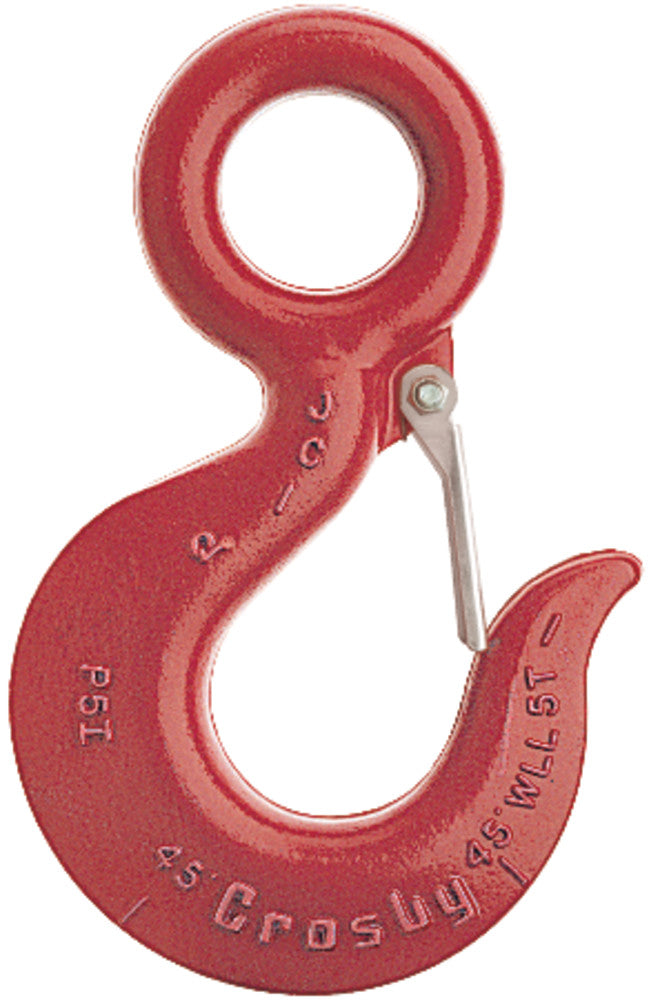
Eye — a closed loop at the top; the most common attachment, used with a shackle, master link, or reeved directly onto a sling. Clevis — a two-lug clevis and pin that connects straight to a chain link or fitting without a separate shackle. Swivel eye — an eye that rotates so the assembly can align and shed twist (most swivel hooks position under no load rather than rotate under full load unless rated as a load-swivel). Synthetic sling — a wide, radiused saddle sized to cradle web and round slings without pinching or cutting them. Shank — a threaded or plain shank for weld-on or drilled mounting into equipment.
Hook types
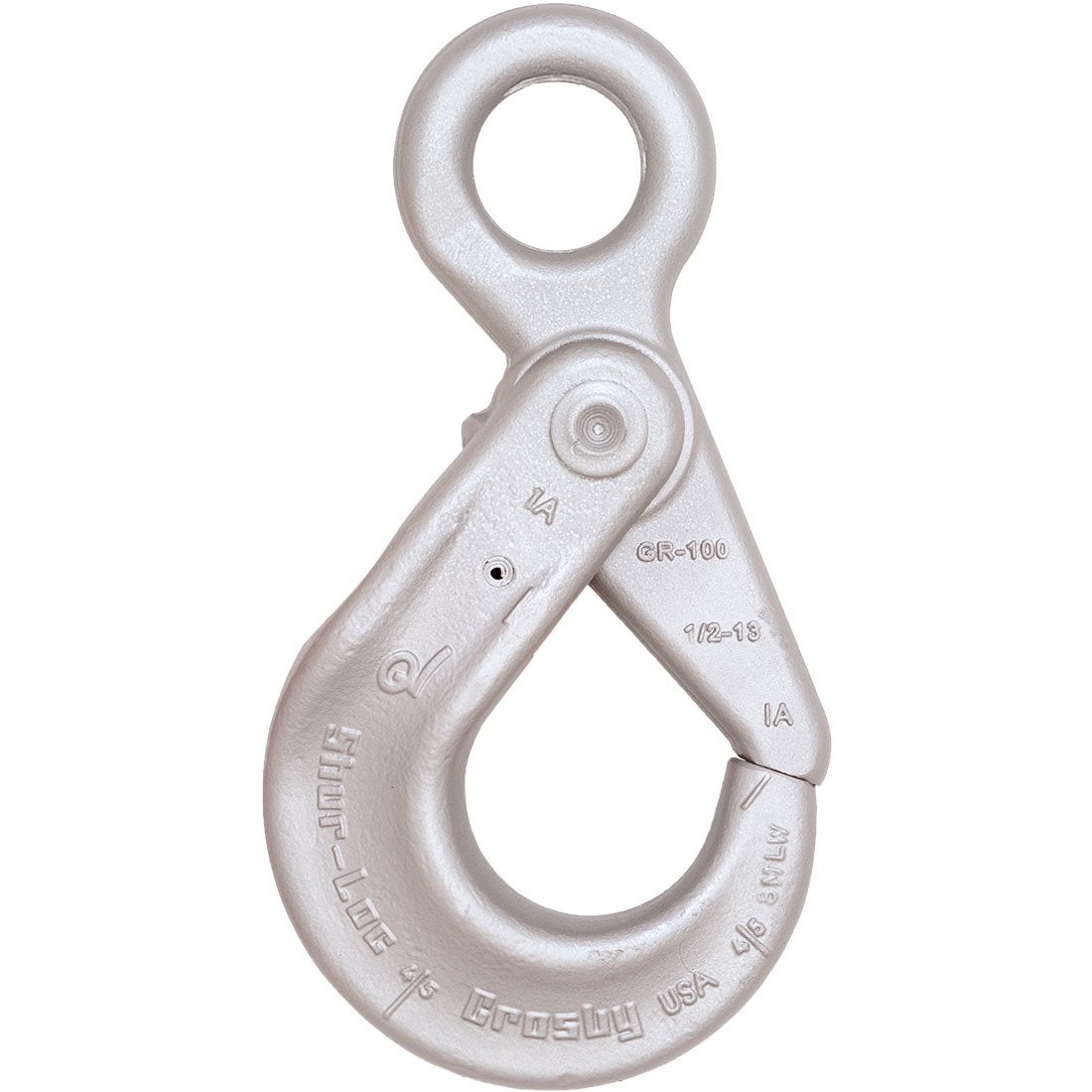
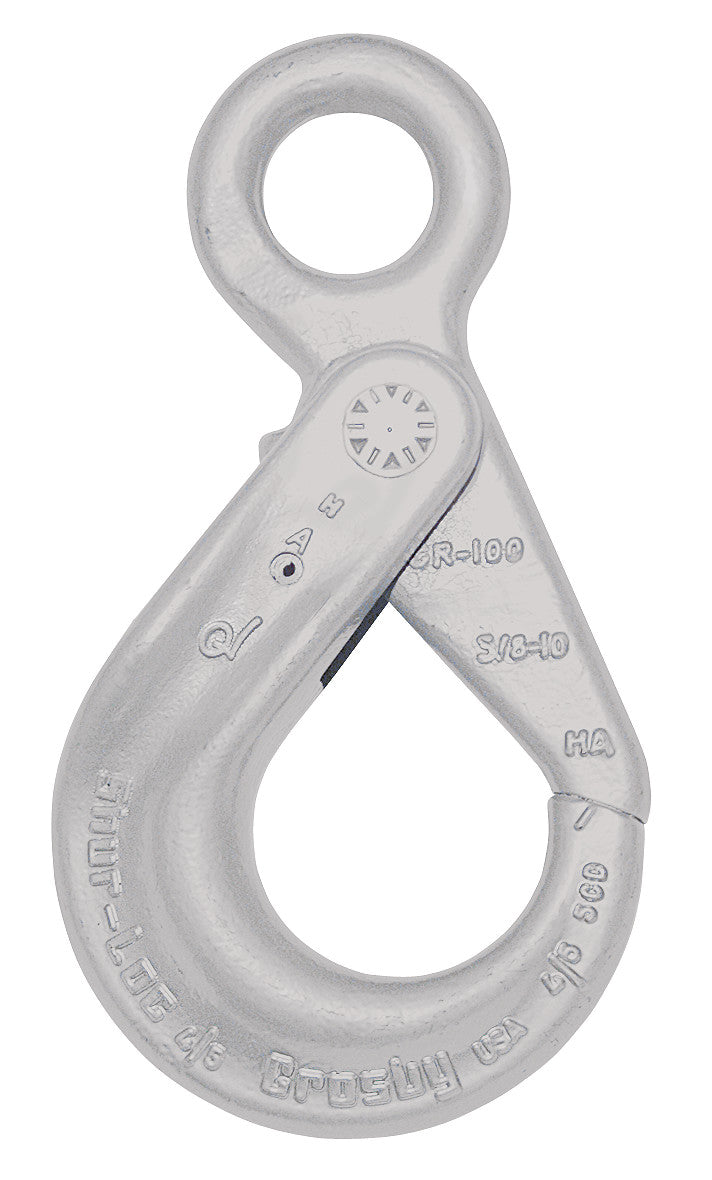
Sling hook — general-purpose lifting hook, usually with a spring latch. Grab hook — a narrow throat that grips a chain link to shorten or choke a leg. Foundry / sorting hook — a wide, deep, latchless throat for high-temperature and high-volume handling. Self-locking hook — a latch that locks under load and cannot open until the load is released, preferred for overhead and critical lifts. Choker hook — slides along the sling to form a choke hitch. ROV hook — built for remote and subsea operation.
Choosing the right hook
Match the hook working load limit (WLL) to your assembly and never exceed it. Reach for a self-locking hook on overhead lifts where accidental disengagement is a risk, and a synthetic sling hook whenever you are hooking directly to a web or round sling. Not sure which hook fits your application? Give us a call — our team rigs these every day.
Rigging & lifting hooks
A hook is the connection point at the working end of a sling, chain, or wire rope assembly. Choosing the right one comes down to two things: how it attaches to your assembly (the connection point) and how it is designed to be used (the hook type). Sling Center stocks Crosby, Green Pin (Van Beest), and Gunnebo hooks in alloy Grade 80, Grade 100, and stainless.
Hook connection points
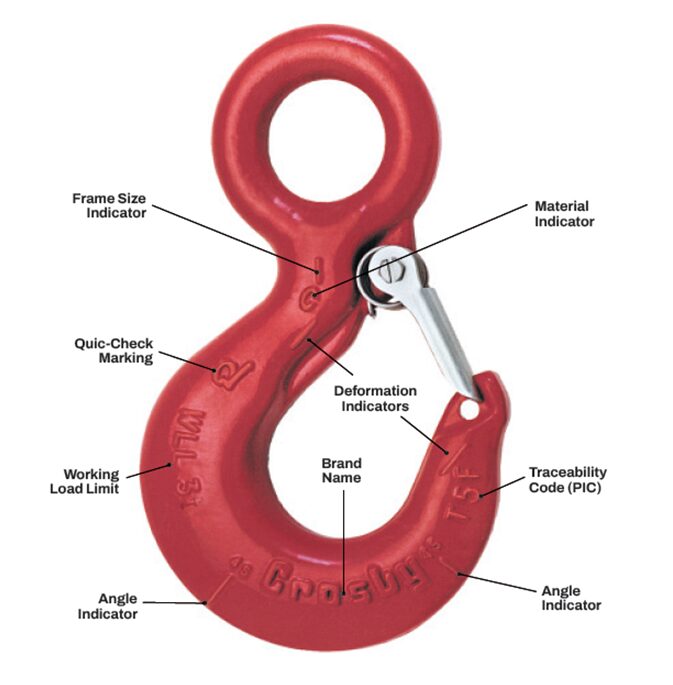
- Eye — a closed loop at the top; the most common attachment, used with a shackle, master link, or reeved directly onto a sling.
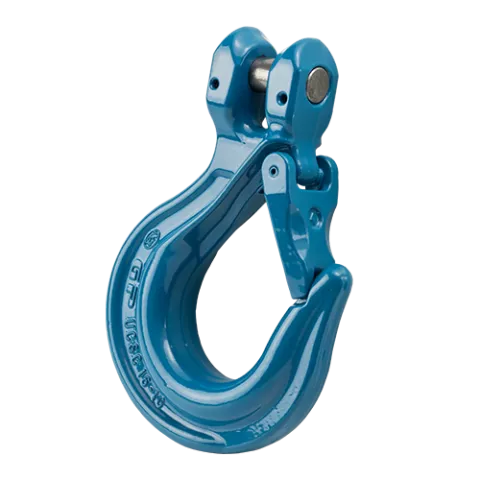
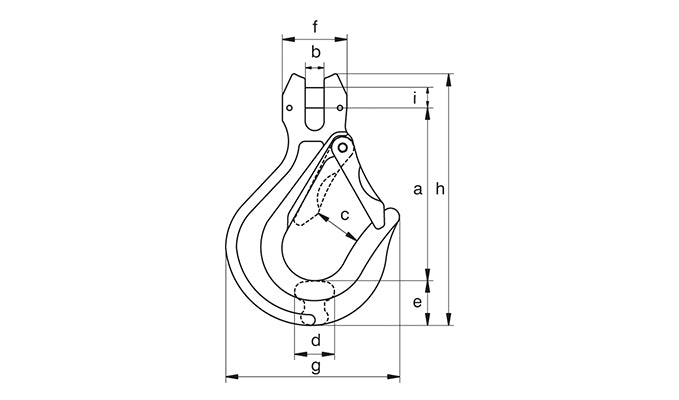
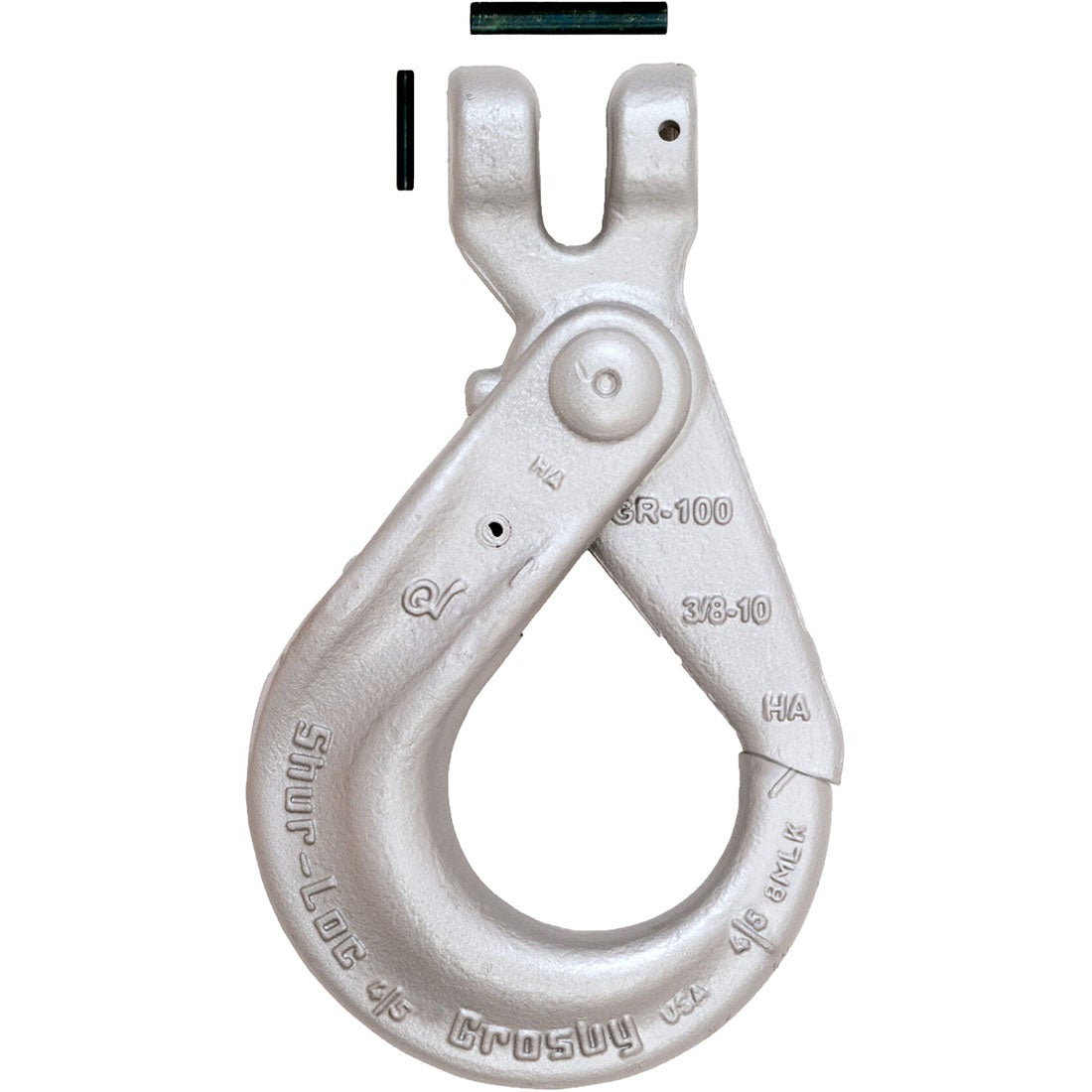
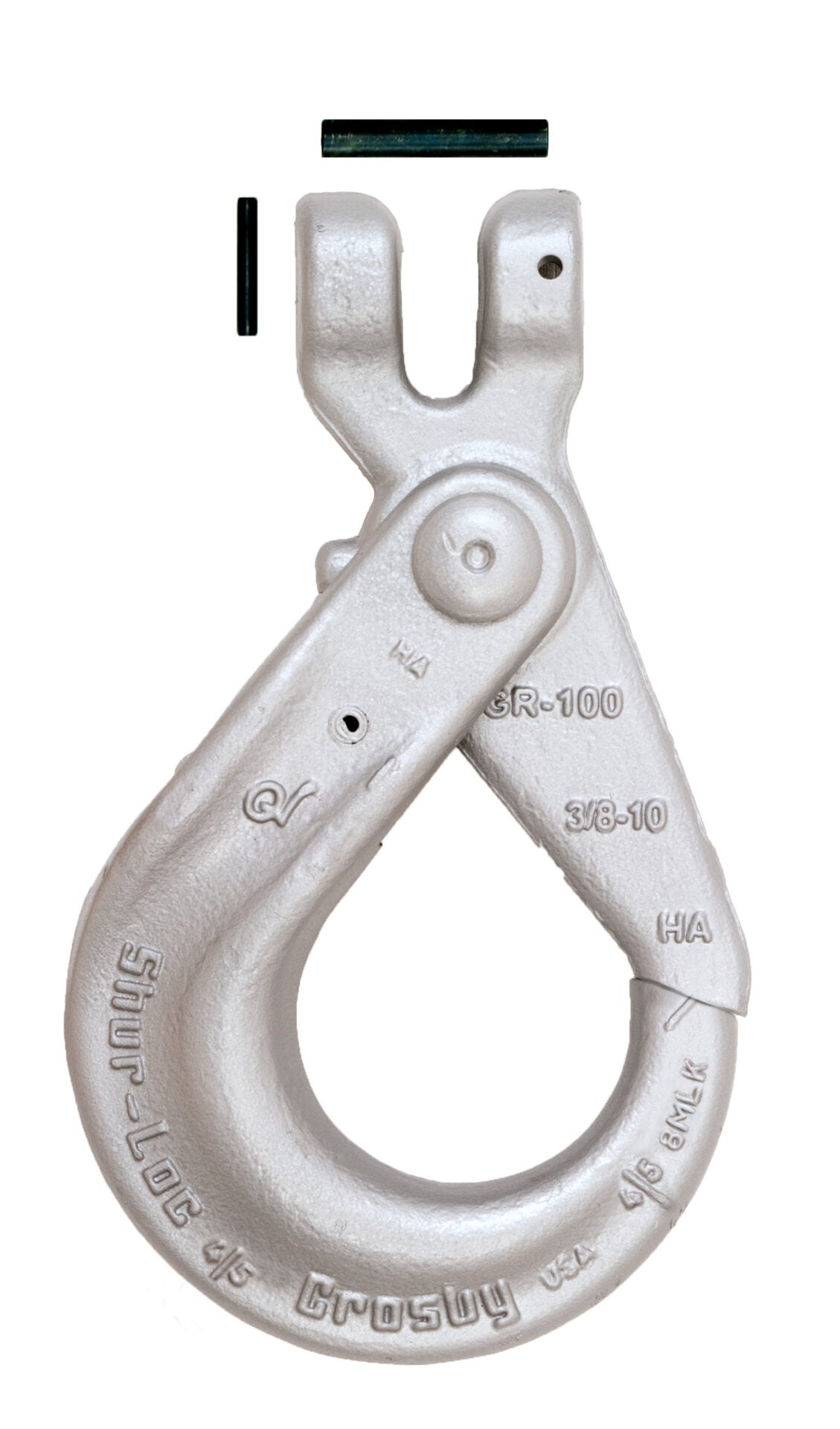
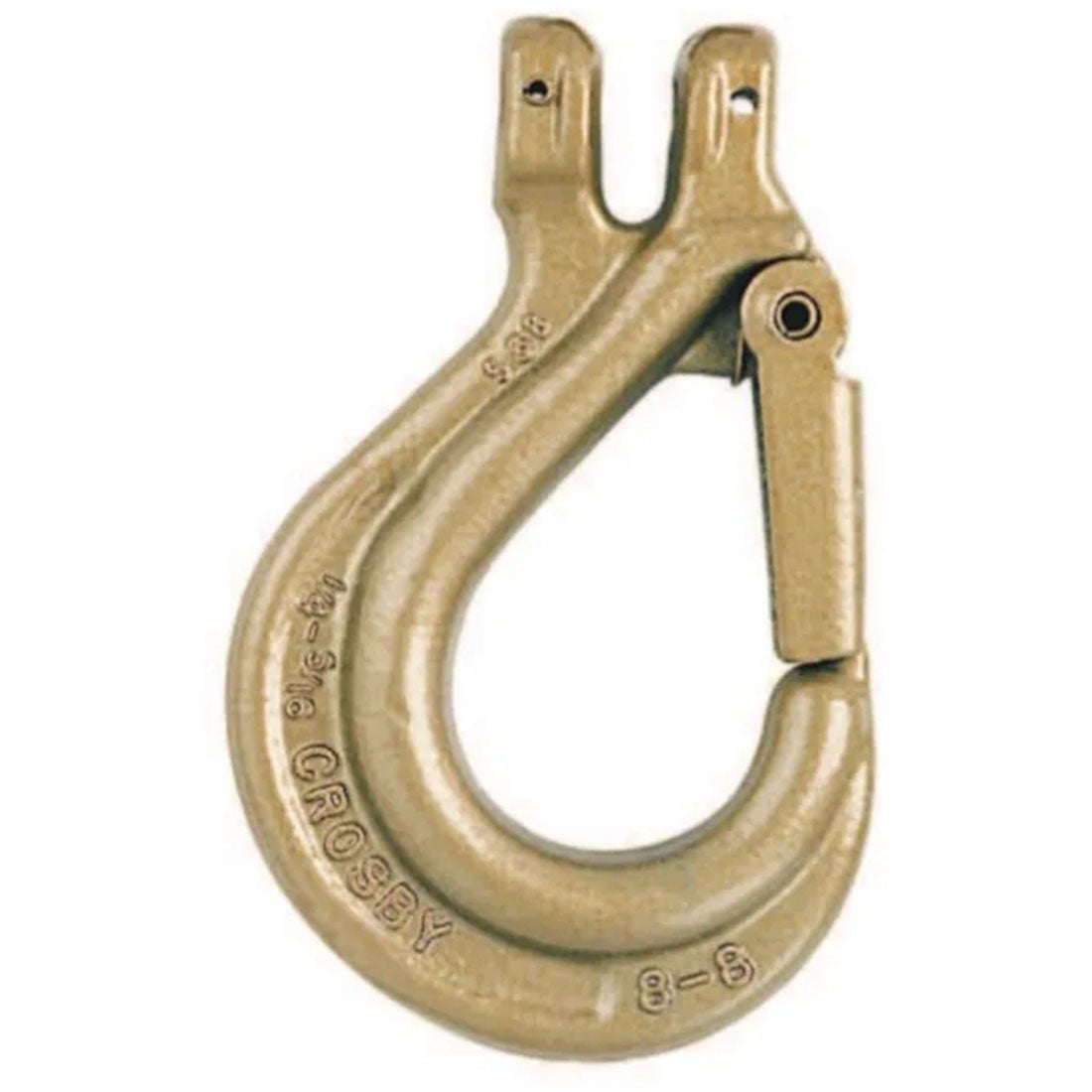
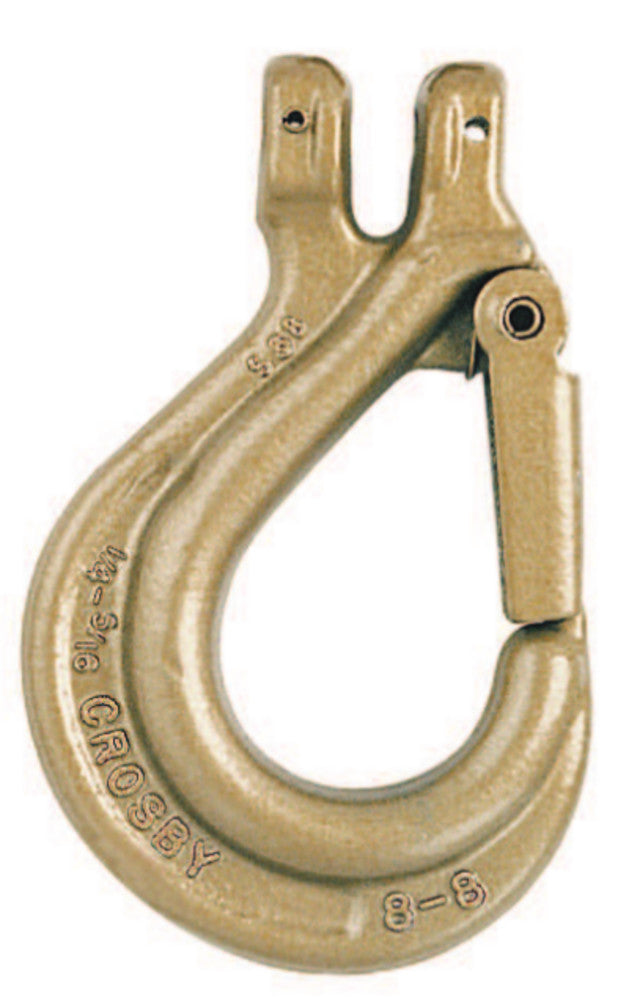
- Clevis — a two-lug clevis and pin that connects straight to a chain link or fitting without a separate shackle.
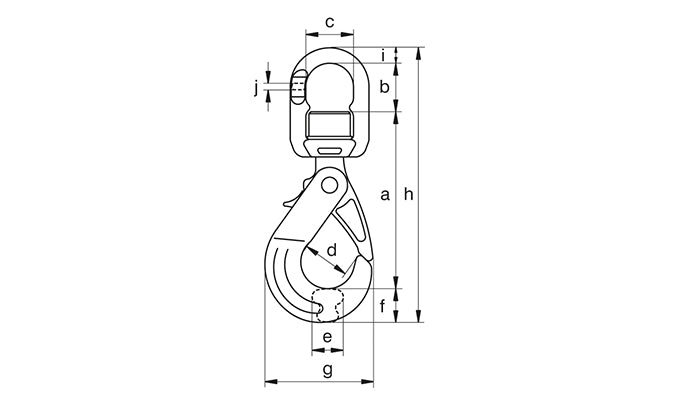
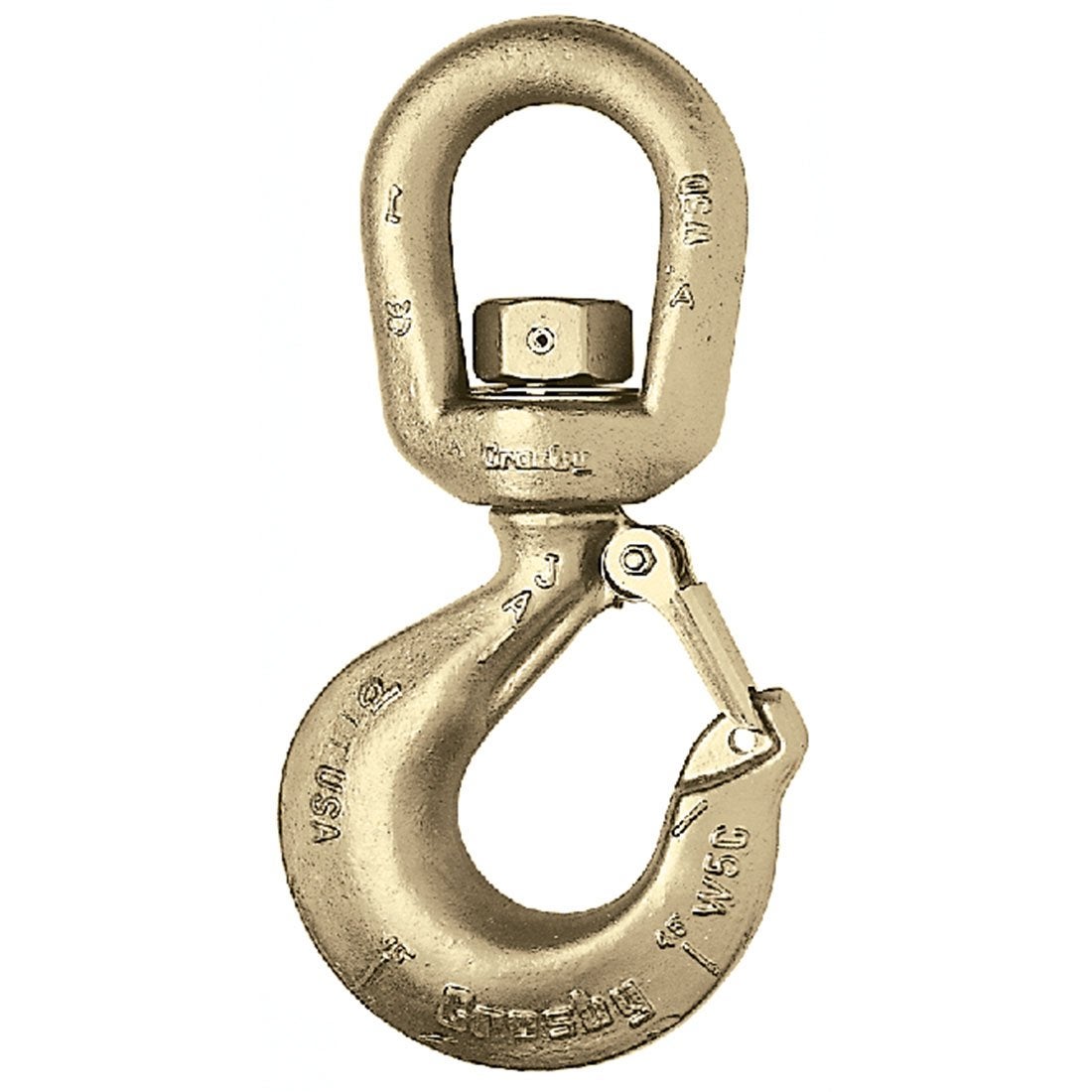
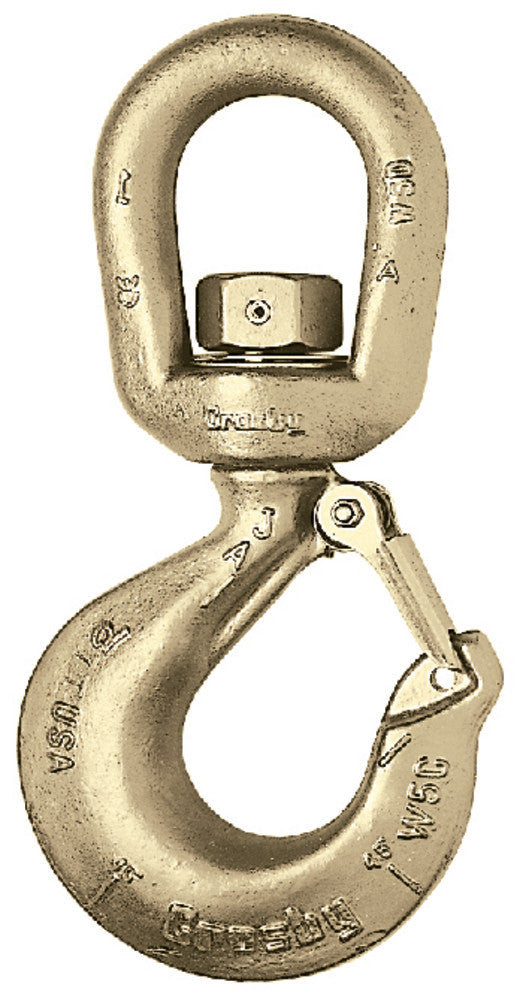
- Swivel eye — an eye that rotates so the assembly can align and shed twist (most swivel hooks position under no load rather than rotate under full load unless rated as a load-swivel).
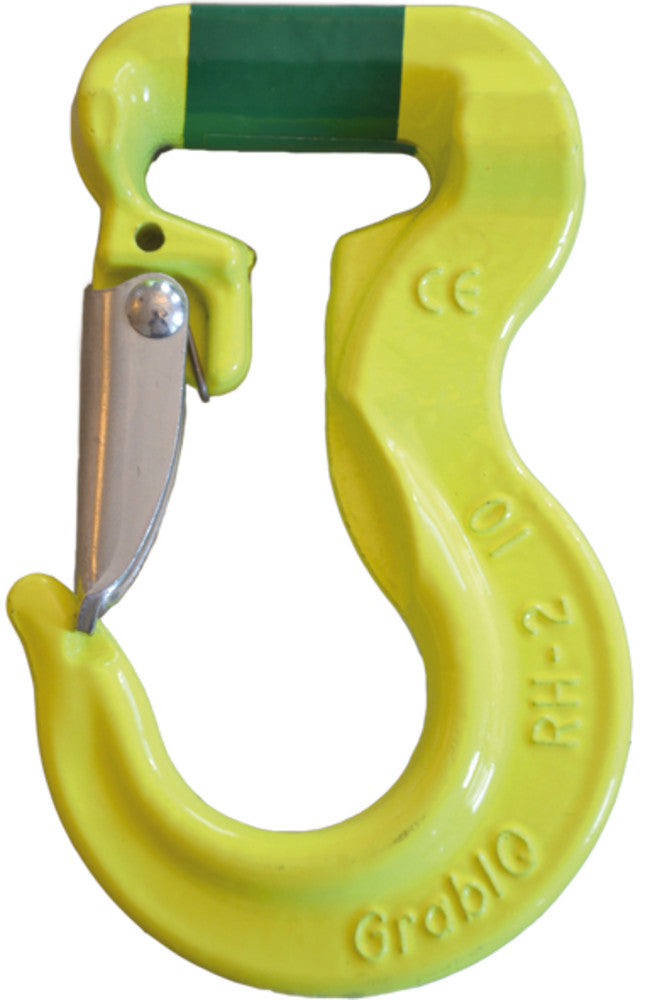
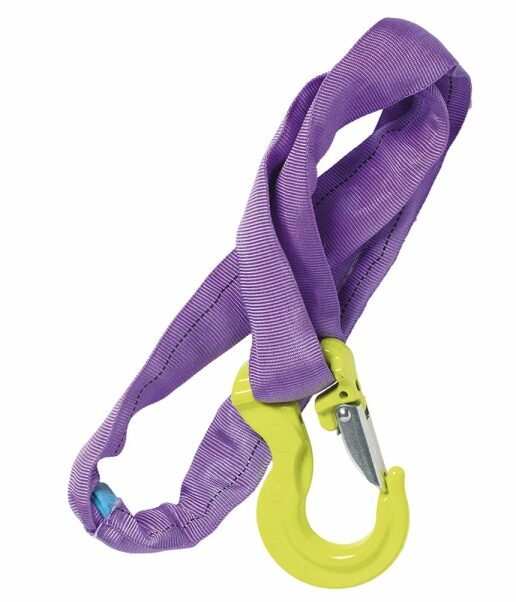
- Synthetic sling — a wide, radiused saddle sized to cradle web and round slings without pinching or cutting them.
- Shank — a threaded or plain shank for weld-on or drilled mounting into equipment.
Hook types
- Sling hook — general-purpose lifting hook, usually with a spring latch.
- Grab hook — a narrow throat that grips a chain link to shorten or choke a leg.
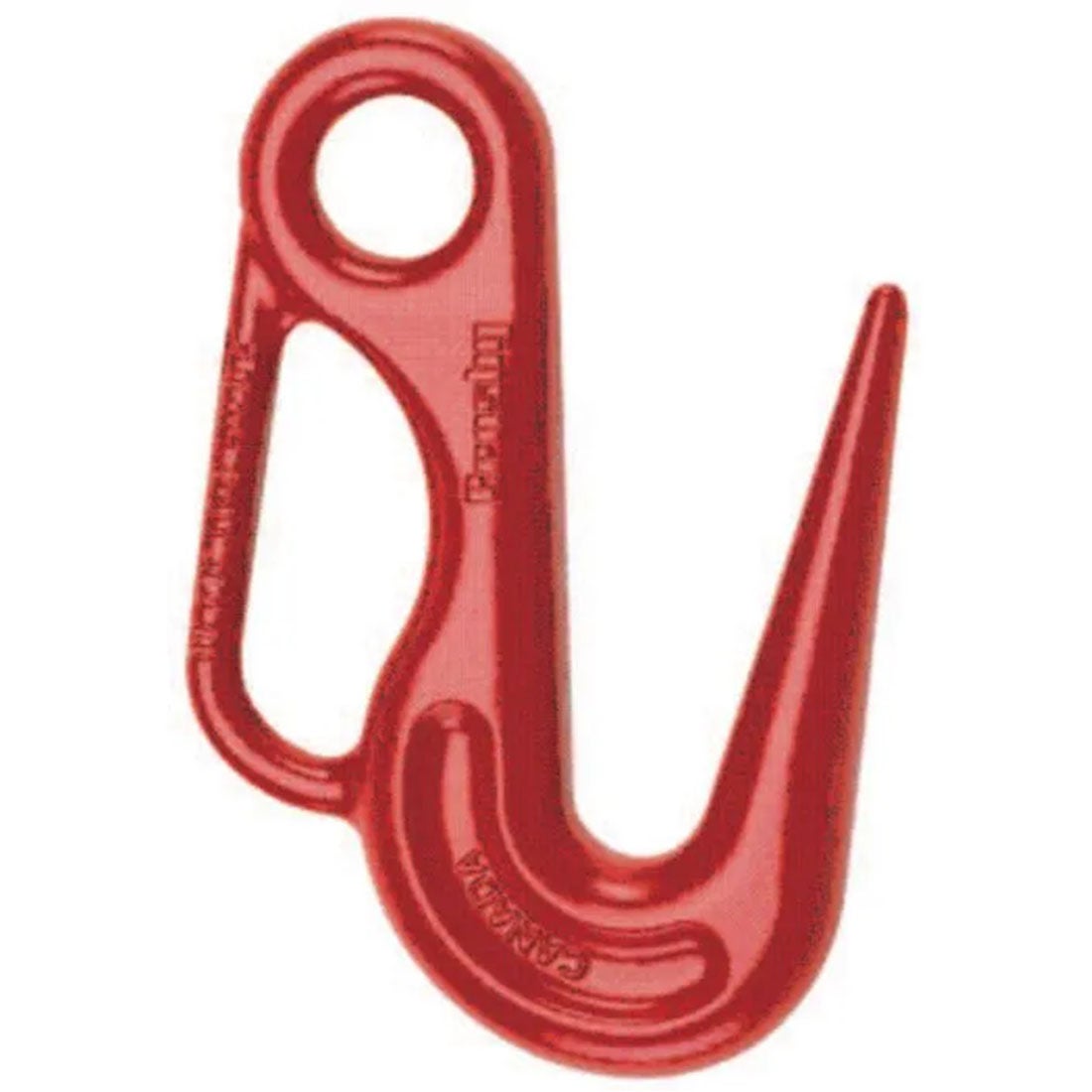
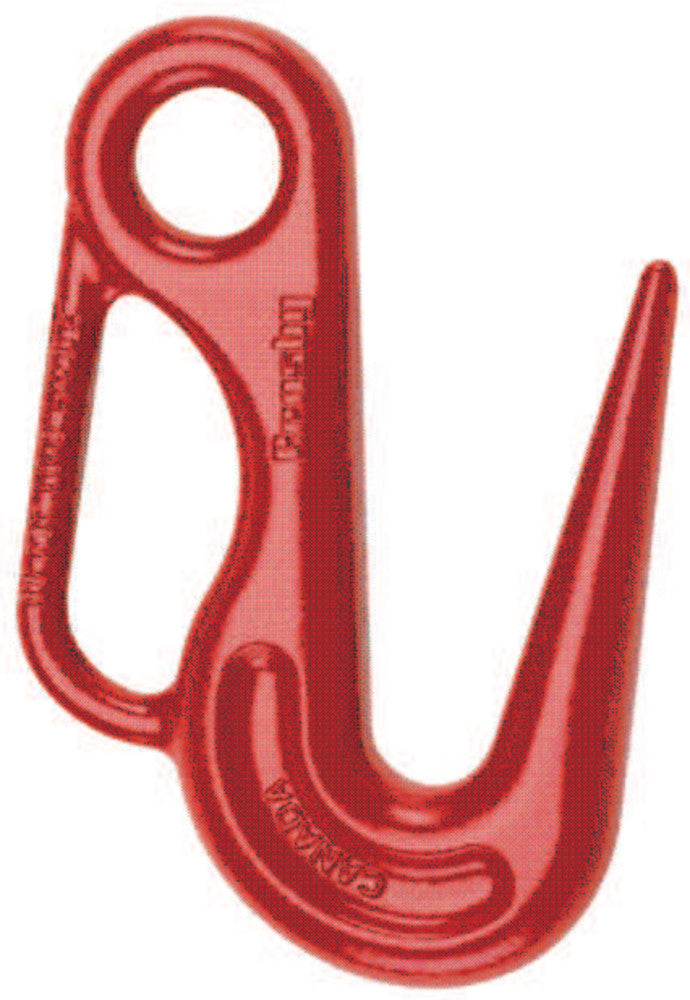
- Foundry / sorting hook — a wide, deep, latchless throat for high-temperature and high-volume handling.
- Self-locking hook — a latch that locks under load and cannot open until the load is released, preferred for overhead and critical lifts.
- Choker hook — slides along the sling to form a choke hitch.
- ROV hook — built for remote and subsea operation.
Choosing the right hook
- Match the hook working load limit (WLL) to your assembly and never exceed it.
- Reach for a self-locking hook on overhead lifts where accidental disengagement is a risk.
- Use a synthetic sling hook whenever you are hooking directly to a web or round sling.
- Not sure which hook fits? Give us a call — our team rigs these every day.
Choosing a Lifting Hook
The hook is the business end of most lifting assemblies — where the sling meets the load. The wrong style for the job invites accidental disengagement or point-loading, so match the hook to the sling, the attachment, and the way it will be loaded. SlingCenter stocks Crosby®, Gunnebo®, and Green Pin® hooks in every style below.
Hook styles
- Sling hook — the general-purpose hook; takes a latch and works with synthetic, wire rope, and chain slings.
- Self-locking hook — a spring-loaded gate closes and positively locks under load; the highest-security choice and often required overhead.
- Grab hook — a narrow throat that seats over a chain link to shorten a leg or fix a length.
- Foundry / sorting hook — an extra-wide throat for hot, bulky, or awkward attachments.
- Eye hook — an eye for pinning to a swivel, block, or hoist.
- Clevis hook — a built-in clevis and pin that couples directly onto chain — the standard chain-sling end fitting.
- Swivel hook — rotates to let the load or rigging spin without twisting the sling (positioning swivels are not rated to rotate under full load).
- Shank hook — a threaded or plain shank for welding or bolting into a fabricated fitting.
Eye vs. clevis attachment
- Eye hooks connect with a pin, shackle, or bolt — flexible and easy to swap.
- Clevis hooks integrate the connector and pin into the hook, so they mount straight onto chain with no extra hardware — fewer parts, faster builds.
Latches & locking
- Standard latch — a spring gate that keeps the sling seated; it retains the load but is not load-bearing.
- Self-locking gate — locks positively under load and won’t open while lifting; best for overhead and personnel-adjacent work.
- Never let a latch carry the load, and never tip- or point-load a hook — loads ride in the bowl of the hook only.
Choosing the right hook
- Rated capacity (WLL) — must meet or exceed the load and match the sling it serves.
- Sling type — sling hook for synthetics, clevis or grab for chain, eye/shank for built assemblies.
- Grade & size — a Grade 100 hook belongs on Grade 100 chain; keep the assembly single-sourced.
- Security — step up to a self-locking gate for overhead or repeated-cycle lifts.
- Motion — add a swivel where the load needs to rotate without twisting the sling.
Standards & safe use
- Hooks are governed by ASME B30.10; slings and their use by ASME B30.9 and OSHA 1910.184.
- Inspect before every use; retire any hook that is bent, stretched at the throat, cracked, corroded, or missing its latch or WLL marking.
- A hook whose throat opening has increased, or whose tip is twisted out of plane, is done — pull it from service.
Complete lifting solutions
- Chain slings & fittings — match clevis and grab hooks to your grade.
- Web slings and round slings — pair with sling hooks.
- Shackles and wire rope — the rest of the rigging system.
- Not sure which hook fits? Talk to a rigging specialist — working riggers, not call-center reps.
Narrow your search