The Wire Rope Sling Experts
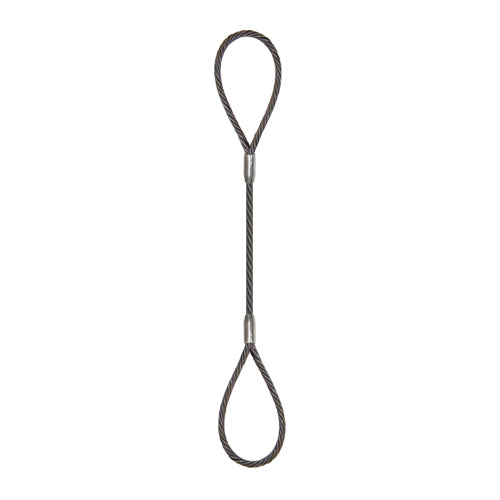
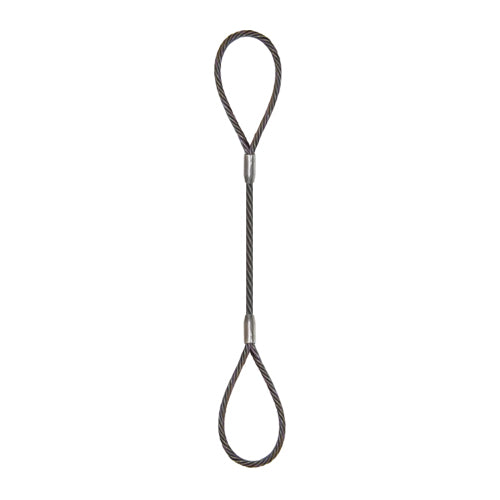
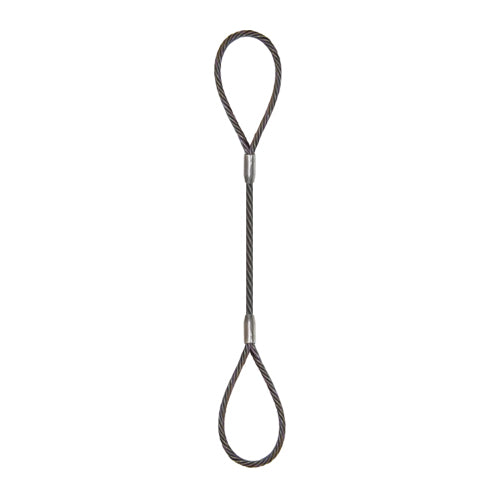
Wire rope (or “cable”) slings are the steel-strong middle ground of overhead rigging — tougher and higher-capacity than synthetic web and round slings, yet more economical and lighter to handle than alloy chain. SlingCenter builds wire rope slings to ASME B30.9, finished with the Crosby® and Green Pin® (Van Beest) fittings the pros trust. Tell us the diameter, length, hitch, and end fittings and we’ll build and proof-test the exact sling your lift needs.
Wire rope construction
Our slings are made from 6x19 or 6x36 EIPS IWRC wire rope. EIPS (Extra Improved Plow Steel) carries about 10% more tensile strength than standard plow steel, so you get higher capacity at the same diameter. IWRC (Independent Wire Rope Core) is a steel core that resists crushing and holds usable strength from roughly −40°F to about 400°F. The class reads as outer strands × wires per strand:
| Classification | Outer strands | Wires per strand | Character |
|---|---|---|---|
| 6x19 | 6 | 15–26 | More abrasion resistance, less flexible |
| 6x36 | 6 | 27–49 | More flexible, better fatigue resistance |
Rule of thumb: over 1″ diameter is usually 6x36 for flexibility; 1″ and under is usually 6x19 for abrasion resistance.
Eyes & end fittings
Most eye loops are formed with a Flemish (molded) splice — the rope is opened, re-laid back on itself, and secured with a pressed steel sleeve that develops nearly the full strength of the rope. End options:
- Soft eye — a plain formed loop.
- Thimble eye — a metal thimble protects the eye from wear and crushing.
- Hook end — a rigging hook on one or both ends.
- Swage or spelter socket — mechanically pressed or poured terminations for high-cycle service.
- Master link — for multi-leg bridle assemblies.
Choosing the right wire rope sling
- Load weight and center of gravity — keep the center of gravity below the lift point.
- Hitch type (vertical / basket / choker) — rate the sling for the hitch you’ll actually use.
- Sling angle — as the horizontal angle drops, leg tension climbs; adding legs doesn’t guarantee added capacity.
- Bend diameter (D/d) — wire rope loses capacity over small pins and hook tips.
- Environment — heat, chemicals, moisture, and abrasion all matter.
- Compatible hardware — the assembly is only as strong as its lowest-rated component.
Domestic vs. import
Both meet ASME B30.9. Domestic slings are USA-made with fittings from leading brands like Crosby®; import slings are a more economical option in a wider range of styles. Tell us which you prefer and we’ll quote both.
Measuring & identification
- Length is measured between the load-bearing points of the end fittings — bearing point to bearing point.
- Every sling ships with a durable tag: manufacturer, diameter, and rated capacities by hitch and angle.
- Socket, grommet, and welded-end configurations are proof-tested before first use; certificates on request.
Sling protection is required
“Slings in contact with edges, corners, protrusions, or abrasive surfaces shall be protected with a material of sufficient strength, thickness, and construction to prevent damage.” — ASME B30.9
Even steel rope can be nicked or crushed on a sharp edge — add a wear pad wherever the sling wraps an edge. Browse sling protection.
Standards & design factor
Our wire rope slings are built to a 5:1 design factor per ASME B30.9; use and inspection follow OSHA 1910.184, and the fittings conform to ASME B30.26. Inspect before every use and retire any sling with broken wires, kinks, crushing, corrosion, heat damage, or a missing tag.
Wire rope sling FAQs
- Is a ‘cable sling’ the same thing? Yes — cable sling, steel cable sling, and lifting cable all mean a wire rope sling.
- 6x19 or 6x36? 6x19 for abrasion resistance (1″ and under); 6x36 for flexibility and fatigue resistance (above 1″).
- Choker hitch? Many can when the manufacturer permits it; choker capacity is reduced by the choke angle and load diameter.
- Can a damaged sling be repaired? The rope body should not be repaired — retire it; some end fittings can be replaced and re-tested by a qualified party.
Complete lifting solutions
- Chain slings for heat, abrasion, and rough service.
- Web slings and round slings for delicate or coated loads.
- Shackles and hooks to connect the assembly.
- Not sure what fits? Talk to a rigging specialist — working riggers, not call-center reps.
Narrow your search